Repairing Blown and Loose Plaster in Leeds Homes
Cracks, holes or damaged walls in Leeds? We explain when plaster repairs are the right fix and when replastering makes more sense. Get a quote today.

Plaster repairs in Leeds: know what you are dealing with
Cracked walls. A hollow thud when you knock the plaster. Patches left behind after an electrician has been through. These are some of the most common plaster problems in Leeds homes, and the first question is always the same: does this need a patch repair, or does the whole wall need to come off?
The answer depends on what caused the damage, how far it has spread and what the plaster underneath is doing. Get that right and the repair lasts. Get it wrong and you are painting over a problem that comes back.
Why Leeds homes of every age need plaster repairs
Leeds has a wide mix of housing, from Victorian terraces and back-to-backs to 1930s semis and newer builds. Older walls can lose their grip on the surface behind them after decades of movement, redecorating and knocks. Newer plasterboard-and-skim walls are easily damaged by impacts, and by patching that leaves ridges once the wall is painted.
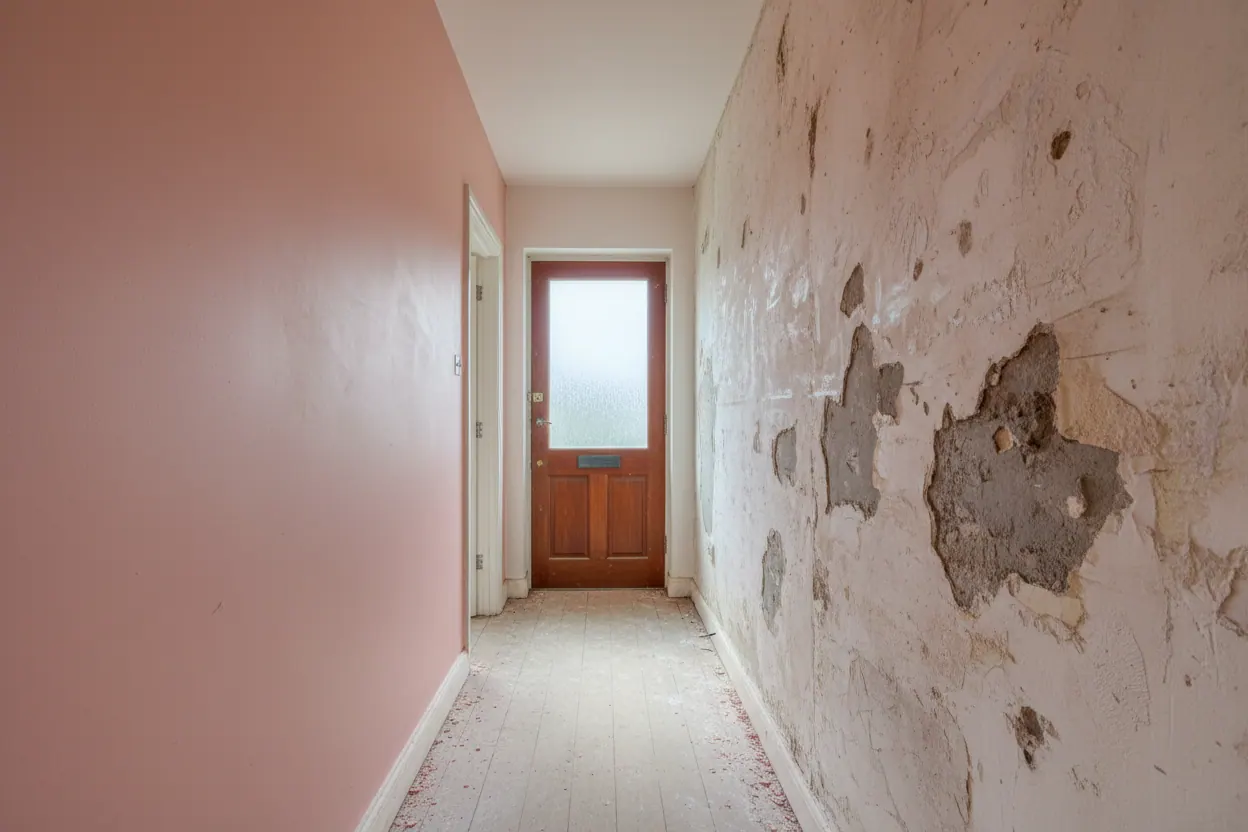
If you strip wallpaper from an older wall, it is common to find plaster that looks fine from a distance but sounds hollow when you tap it. None of this is unusual, and it is fixable.
A crack worth patching, and one worth worrying about
Not every crack needs a plasterer. Hairline cracks where the wall meets the ceiling, or fine crazing across a painted surface, are usually cosmetic and can be dealt with by a repair or a skim.
Wider cracks, cracks that reappear after filling, or diagonal cracks running from door and window corners can point to movement in the building. The cause needs to be identified by the right specialist before anyone plasters over it, because plastering over active movement is a short-term fix at best.
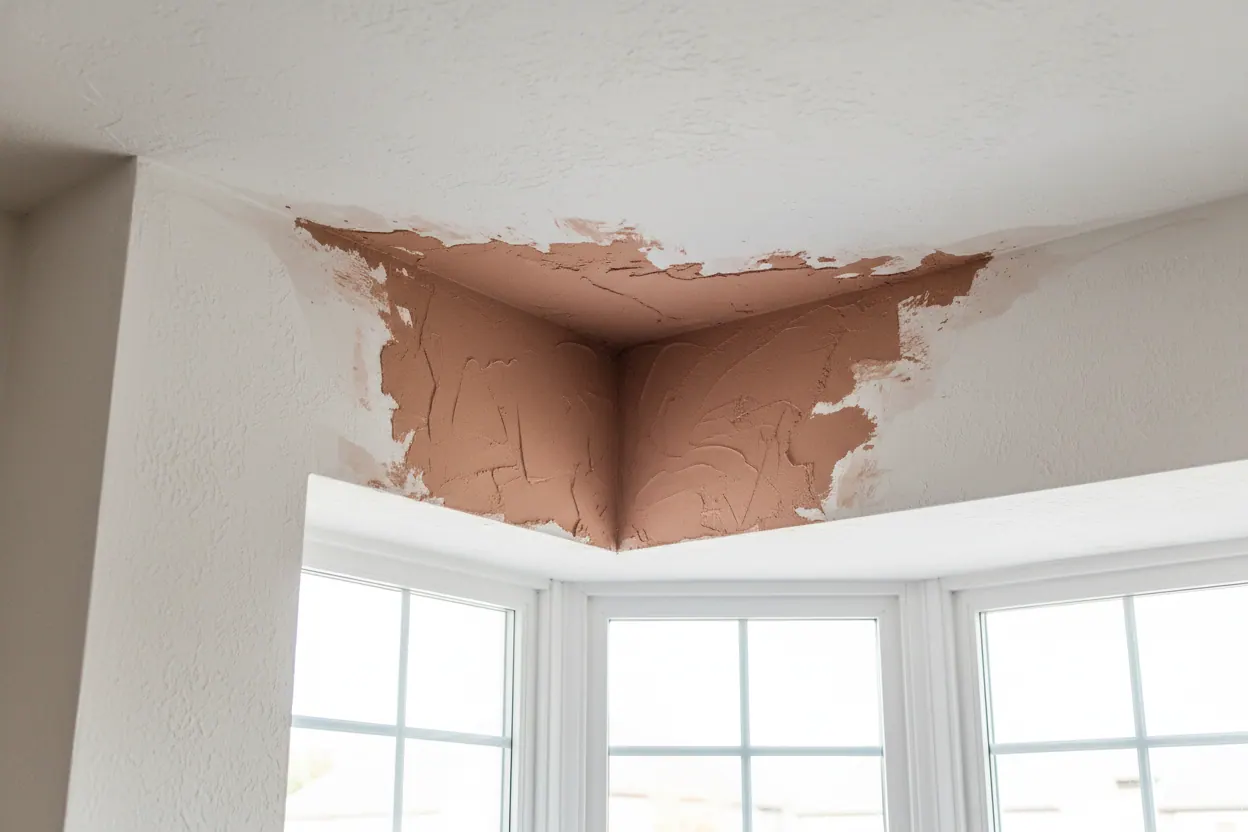
The same goes for damp. If the plaster feels soft, is stained, or the surface is powdery or blistering, moisture is involved. The source has to be found and fixed first. Plaster repairs come afterwards.
Common plaster repair jobs
Patching after electricians, plumbers and fitters
A rewire leaves chases cut into walls and ceilings and holes for back boxes. Pipework leaves similar damage, and removing old units leaves fixings and raw patches. Making good after these trades means building the patch up flush with the surrounding surface and finishing it so there is no visible line once it is painted. Rushed patches tend to shrink, crack or show through the paint. Our plaster patching and making good page explains more.
Loose or hollow plaster
Hollow plaster has lost its grip on the wall or ceiling behind it. Tap the surface: solid plaster gives a dull thud, loose plaster sounds hollow. Left alone it will eventually crack and fall away. Small areas can sometimes be cut back and made good. Large hollow areas, or ceilings where plaster is clearly failing, are usually better taken back and re-done. Patching hollow plaster over a wide area rarely looks right or lasts. See our plaster repairs page for what is involved.
Damaged corners and edges
Corners in hallways and door reveals take a lot of knocks. Once an edge chips or crumbles, it gets worse every time it is hit. A damaged corner is cut back and rebuilt, then finished flush so the edge is crisp again.
Holes left by removed fittings
TV brackets, shelves, old radiator brackets and rails all leave holes and sometimes patches of pulled-off plaster. These can be filled and made good individually. If the wall has taken damage across a wider area, a full skim often gives a cleaner result than lots of separate patches.
Patch repair or full skim: how to decide
A patch repair makes sense when the damage is isolated and the surrounding plaster is sound. It is quicker and less disruptive.
A full wall skim makes more sense when:
- There are several patches across the same wall
- The surface is uneven, heavily painted or has been wallpapered many times
- You are about to paint and want a consistent, smooth finish
- The plaster is old and tired across the whole wall
If the plaster is loose over large areas, full re-plastering may be the better answer. Photos of the wall make this much easier to judge, and our guide on how to tell a good plasterer in Leeds explains how to take useful ones.
Preparing your room
A little preparation helps any plastering job:
- Move furniture to the centre of the room or out of it
- Take down pictures, mirrors and anything fixed to the walls
- Note any sockets, cables or pipes near the damaged area
- Make sure the area is accessible and well lit
Frequently asked questions about plaster repairs in Leeds
Can you plaster over old plaster? Often yes, provided the existing plaster is sound, well bonded and reasonably flat. Any loose material is removed and the surface is prepared before new plaster goes on. Where old plaster is hollow or badly uneven, it is better taken off and the wall re-plastered.
My cracks keep coming back. What is causing that? Recurring cracks usually mean there is ongoing movement, or that an earlier repair was not done properly. If cracks reappear after filling, have a builder or structural surveyor take a look before replastering.
I have had an electrician through and the walls are a mess. Do I need a full replaster? Not necessarily. If the damage is limited to chases and back-box holes, patching and making good is usually the right approach. If most of a room's walls have been disrupted, a full skim may give a cleaner result.
Can plaster repairs be painted straight away? No. New plaster has to dry fully first. How long that takes depends on the thickness of the repair, the temperature and the ventilation in the room.
If you have damaged, cracked or patched walls in your Leeds home, use our quote form to tell us what you are dealing with and, if you can, attach a few photos.